Here at SOTEM we aspire to build a directory of nature’s foods and remedies from around the world, including recipes, uses, identification and where you are most likely to find them. This will be an ever expanding list so please feel free to email sotemboard@gmail.com with any information you would like to add or some information you are looking for and can’t find and we will do our best to fill in the gaps. Please search using common name.
A B C D E F G H I J K L M N O P Q R S T U V W X Y Z
A
B
C
D
E
F
G
H
I
J
K
L
M
MUGWORT (Artemisia Vulgaris) – A foraging journey that ends at a sacred spring, meeting many of mother natures gifts along the way. Here I stopped to bless the waters and gather them for my alter and healing work. I was gifted a liberating song as the heavens opened and poured down their rain on me. As this was a private connection between myself and the spirits of the well I have not shared it. But a feel that there will be a song gifted to share with you when I go to share blessings on a new moon. (One correction, when I mention Rosebay Willow herb it is in fact Great Willow herb, also used as a tea for gastro-intestinal and bronchial complaints.)
Full of vitamin C and unsaturated fatty acids.
You can use young shoots, flower buds, flowers, leaves and stems. A good all round culinary herb for adding to soups, stews & stuffing. It can be made into a tea, steeped in milk as part of a chai mix, or even add the young shoots and leaves to your salad.
It is traditionally known as the “woman’s herb” and was used to bring on menstrual flow and induce birth, so do not use this herb if pregnant until it is time for labour. It has also been used as a general stomach tonic, stimulating appetite, relieving nausea and as a cure for worms.
As a spiritual herb it brings clear vision and aids the dream state, often used as a smudge or fire bundle.
For more information on foraging, medicinal uses and recipes check out Robin Harford at http://www.eatweeds.co.uk. And for even more delicious wild food recipes take a look at Vicky’s site http://www.thelittleforagerskitchen.com
Mullein (Verbascum Thapsus) –
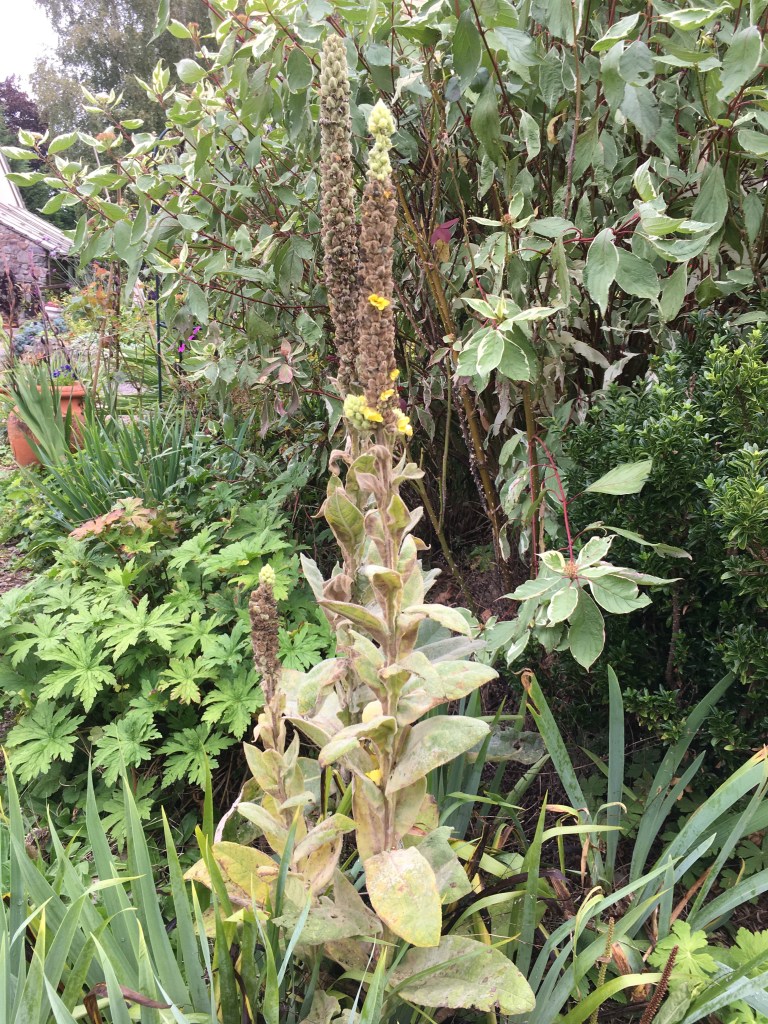
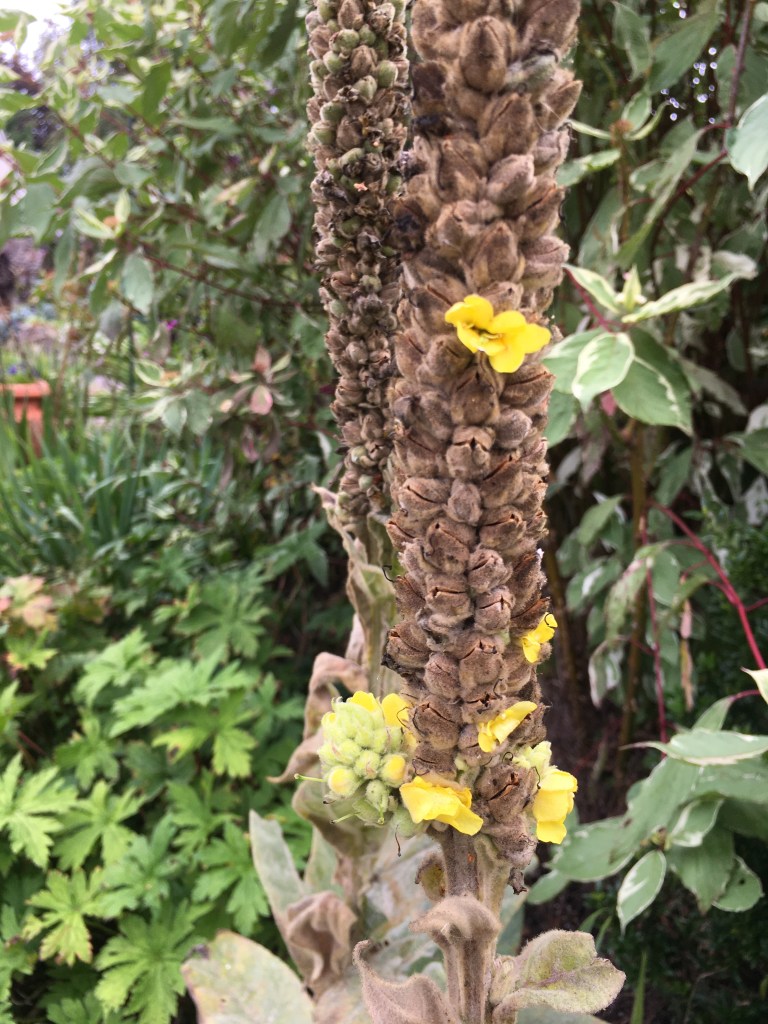
Mullein is an expectorant and anti-inflammatory, helping the body to expel excess mucus. It is often used as a lung remedy, helping to relieve asthma, pneumonia, bronchitis, throat and lung infections, coughs, earaches and migraines. As it also contains anti-bacterial qualities it is used in the treatment of wounds and general infections.
It can be taken as a tea, tissane or tincture.
More information and a video to follow.
N
O
P
Q
R
S
Stinging Nettle (Urtica Dioca) – a short foraging trip to collect some stinging nettle seeds. I will show you how to process them, make tea from the leaves and explain the many uses and nutritional components of the humble plant that gifts so much magic.
The humble stinging nettle is chock full of nutrients: Vitamins C,D and some B’s, potassium, calcium, chromium, copper, magnesium and iron. This is why the seeds are known as a superfood and can be sprinkled liberally on any food or drink.
As a food it can be used in a wide variety of recipes as a flavouring or as a leafy green, often used as a spinach substitute. Its also makes a very tasty tea.
As a medicine it’s uses are also wide ranging, from reducing the effects of hay-fever to relieving rheumatism and sciatica as it stimulates the circulation.
In the Bronze Age it was used as a cloth dye and cording, making fine threads for weaving cloth or making thicker cords and rope. I have yet to try out processing the fibres from the stems, it is next on my list.
 SOTEM
SOTEM 